Why You’re Stuck and How to Change
Not all your fault.
Let me preface this by saying that while I’ve always had a problem with static people. I understand that they are products of their environment, and these environments have, on the whole, not been beneficial to them.
We live in a system that monitors and controls us from our birth certificate to our death certificate. Yes, we think we have freedom and independence, but it’s all within the linear life checklist that has been prescribed as a must-have to determine whether you have a successful life or not. When people achieve these meagre goals, they sit back and enjoy their couch of complacency until they retire and then wait for death.
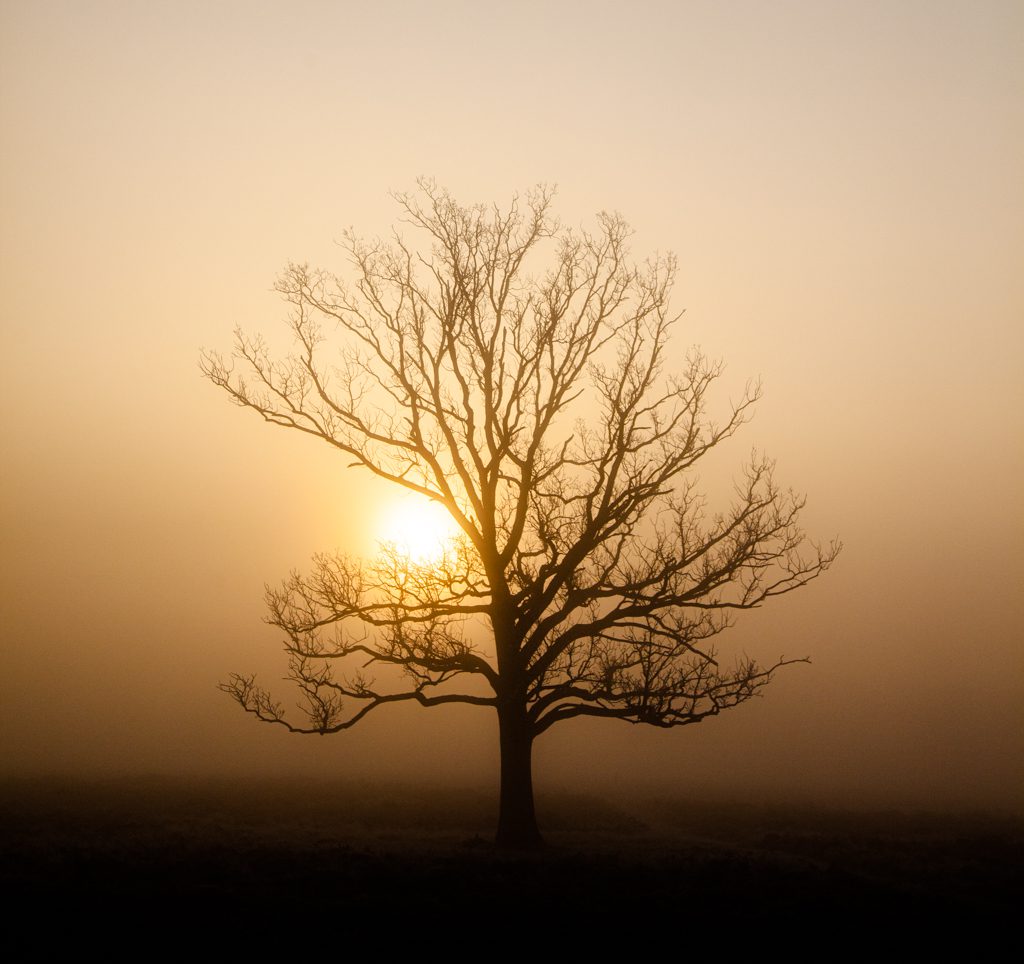
The Conditioned Life.
Life Checklist: Birth, school, university, work, find a mate, buy a house, start a pension, have children and a dog, grow a career, retire, relax, die.
These are the basic steps of the conditioned life experience that we’re taught by our parents, teachers, professors, bosses and governments. If you don’t follow these, you are deemed to be unsuccessful or worse, doomed to be an outcast in this world. But all these steps really do is ensure that you will remain an obedient “grey” citizen within the system of humanity.
Almost everyone is chasing a future where they can finally stop. We tell ourselves, “I’ll be truly happy when I get the promotion, when I pay off the mortgage, when I lose twenty pounds, or when I retire.” We envision a plateau, a high point where the work ends and the passive enjoyment of life begins. This is the great illusion of static happiness, and it’s arguably the most insidious barrier to us reaching our full potential.
“Compared to what we ought to be, we are only half awake” – William James
I’ve read that it is called the Arrival Fallacy, which is the belief that reaching a major goal will result in permanent, lasting happiness. It doesn’t, and we’ve all experienced it. Think back to the last major achievement you had in your life. You struggled, worked and then achieved something. You enjoyed the spike of joy for a short period of time, and then it disappeared like a fart in the wind.
The human brain is not wired for stasis.
The mushy mass between our ears is a magnificent organ that takes care of so much in our lives without us having to think about it. However, it is not wired for chilling with Netflix on your couch day in and day out.
It is a complex predictive machine, constantly seeking challenges, danger, novelty, and complexity. When you eliminate all the friction and challenges in your world, whether by seeking a safe life or taking retirement, the brain doesn’t relax into a state of contentment and bliss. It actually begins to atrophy and soon starts to generate anxiety, searching for meaning in the void that you used to fill it with. With our ancient part of the brain (Amygdala), constantly looking for threats to protect us from, if it cannot see anything, it will start making things up from the mundane lives we’ve chosen to settle into.
It is a peculiar irony that many of us face: a deep-seated desire for a better life, coupled with a persistent failure to take action to make it happen. The static human doesn’t just push the pause button on their lives, instead they slowly enter a state of psychological inertia (Definition of inertia: a tendency to do nothing or remain unchanged).
This inertia is characterised by the effort required to initiate movement (to learn a new skill, repair a failing relationship, or tackle a difficult project), feeling impossibly heavy. People are waiting for motivation to strike them, not understanding that motivation is a result of action, not its cause.
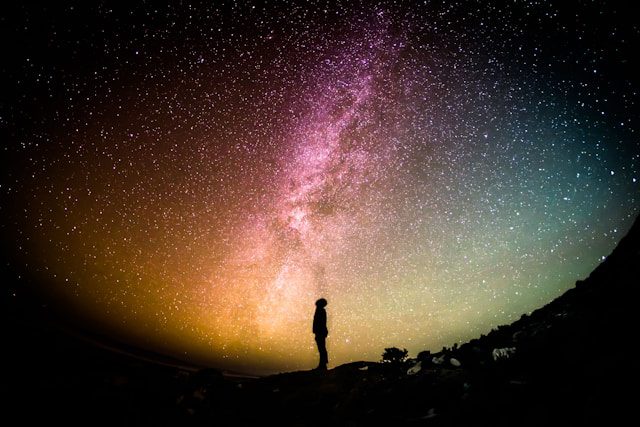
Struggling in a static life
There are generally two types of static situations that the majority of people could find themselves in, all because of their beliefs that life is a simple checklist that needs to be ticked off in order to relax in glorious achievement. Firstly, it’s those who have aspired to and worked towards achieving all the prescribed goals, and then sat back to enjoy them. Secondly, it’s those who have aspired to achieve all their goals, failed, and then settled back into a state of contentment with whatever they have.
Many people who feel stuck, either by choice or circumstance, eventually start to suffer in various areas where they once found happiness and fulfilment. Think about a beautiful garden filled with trees, shrubs, and beds of colourful flowers. If you don’t keep tending to it, it will soon start to become overgrown with weeds and have piles of debris lying everywhere. Gradually, you lose control as it returns to nature, and it no longer looks like what you worked so hard to create. This happens to your brain if you don’t work on challenging it.
Static people start to complain without taking action. They moan about their life, their career, their relationships, and anything that will bestow a victim status on them because it’s harder to change these things than it is to survive on the pity of others. They tell everyone who will listen about how they want to change, but never actually take any action. And why is that?
The main reason is that we have, as a species, made comfort one of our gods. We now idolise the notion that we can achieve a simple work-life balance that will make us happy, not realising that this desire is the epitome of mediocracy, with its comfort and familiarity. We avoid doing anything hard, which steers us away from trying anything new.
In this static state, we cling to old routines because change would mean learning something that we may fail at, and this is where the atrophy really sets in. Look no further than the obesity crisis in the world, where people will hold onto twenty years of weight gain, because one year of weight loss from healthy living is hard work and uncomfortable (and they believe they may fail).
In the end, when the static human reaches a point of almost no return, they turn their anger outward, blaming the economy, their boss, their partner, and their family and friends. It is simply never their own fault for all the stress, anxiety, and mental and physical neglect they have brought onto themselves.
Many people who live static lives are not just sitting on the couch, but are actual working people in our workplaces and communities. They’re intellectually and professionally stuck in a job that they believe they must stay in until they retire, so that they can cross it off the list. They continue with this despite having a sense that they are being left behind in life due to their inability to change and move in a different direction.
We all know people like this in our lives, and maybe you are one yourself, forever wanting to change. So, how do you change from having a static life? Well, you need to become a dynamic person in everything you do. It will take time, but it’s a fantastic crossover to embark on with so much growth that can happen.
The biggest thing gnawing at you is the unfulfilled potential you have within you. All those aspirations, dreams, and goals inside you that you moved to the side because they didn’t fit in with the checklist of life. Those aspirations are where your true potential lies.

Potential as a Verb, not a Noun
People often treat our potential as if it were a hidden treasure map. A mouldy old document to be searched for, found and then framed. Potential isn’t a fixed list of commandments but is a dynamic resource that grows with use and shrinks with neglect. If you aren’t actively seeking to test your limits, to expand your knowledge base, or to engage with the world in a meaningful way, you aren’t preserving your potential—you’re allowing it to decay.
The happiest and most fulfilled people aren’t those who’ve successfully optimised their lives for comfort. They are those who’ve optimised their lives for growth. They embrace the work of living. Psychologists talk about the flow state: the deep immersion and enjoyment found in challenging activities that perfectly match your skill level.
We’ve all felt that feeling of flow. Where time melts away because you’re operating at the peak of your current ability, and it is pure, unadulterated happiness. And this only occurs when you are in motion.
If you’re static or stationary in your life, your skills become rusty. Your insights become outdated. Your creativity muscles all stiffen up without use. You start to lose relevance, not only in the global job market, but also in your own sense of self-worth and agency. When you stop moving forward, the world doesn’t stop for you to take a long break; as a result, you get left behind with your “happy work-life balance”.
I know this balance thing is all the rage since Covid, and don’t get me wrong, hyper-flexibility in a working life will have huge advantages for everyone. Just remember that balance doesn’t happen when you are stationary. You remember learning to ride a bike. If the bike is still, and you place both feet on the pedals, you fall over. The only way to keep balanced is to move forward by pedalling. Even then, as you move forward, you have to shift your weight from left to right to make small corrections to maintain balance. It’s like life, sometimes you have to prioritise work, sometimes you have to prioritise life. If you try to do both, you must stop and place both feet on the ground, becoming stationary again.
Over many years, my own answers to the ‘what’s the meaning of life” question have varied across several areas as I’ve grown and matured. As I approach my sixtieth revolution of the sun, I believe that the answer to what our only purpose on earth is, is simply to reach our full potential. That is all. This potential will be different for everyone, because we are all different. It’s why I deplore our education system so much, because its job is to make every child conform to some “grey average potential” determined by people who want to control the population. It definitely used to work decades ago, but with the internet and the global knowledge available, many people are no longer content to “work and then retire” when they can see a better life out there. They just don’t know how to achieve it.
Reaching your potential is relatively simple. You must embrace change, then transition from a fixed mindset (static and safe thinking) to a growth mindset (dynamic, embracing change and failure).

Becoming a Dynamic Person
It’s not all doom and gloom if you are stuck in your life or any particular part of it. The secret is just to acknowledge that you want to change and become a more growth-oriented person, as opposed to someone who is content with what they have. Deciding to change is easy. It’s a single thought. Making the change stick will mean doing things outside your comfort zone over a period of time until it becomes a habit you don’t need to think about.
Now, it won’t be easy to find a path out of this inertia because you will no doubt have built up many limiting beliefs and sabotaging patterns to justify why it was okay to stay where you are. I promise these will all disappear over time as you focus on moving forward.
Here are a few tips that I can offer that I use in my coaching business.
Stop Waiting for the Spark, Start the Engine: Don’t wait to feel motivated to start that project, go for that walk, or read that difficult book. Just start. Commit to five minutes of the uncomfortable thing. Getting a body (or a mind) in motion is 90% of the battle. Take that small first step.
Embrace lifelong learning: This is a passion of mine (some might say an obsession). The pursuit of knowledge and understanding should be a never-ending journey. To start, you have to be intentional about it. Whether it is formal education, reading outside your comfort zone, watching documentaries on TV, or listening to podcasts on YouTube, cultivating an insatiable curiosity to engage with new information is what really keeps our minds agile and moving forward.
“Live as if you were to die tomorrow. Learn as if you were to live forever.” – Mahatma Gandhi
Seek out new experiences and challenges: Nothing in this world keeps our brain young than the creation of new neural pathways, caused by learning something new, or doing something for the first time, especially if it’s challenging. Stepping outside your comfort zone is crucial. New hobbies, travelling to a new country or city, volunteering, or tackling challenging problems expand our minds and changes our worldviews. Schedule challenges in our life alongside your relaxation time. You may feel scared, fearing failure or embarrassment, but doing it anyway is a fantastic route to cultivate a growth mindset within you. Actively seek out ways to grow rather than waiting for them to come and challenge you, because this drives you to seek out that balance and forward motion. All this will start you on the path to becoming a dynamic person.
Shift from outcome goals to process goals: Instead of focusing on the outcome, e.g. “I want to write a novel,” a really overwhelming goal for many. Try focusing on the process rather, e.g, “I will write 500 words every weekday,” which is a much more manageable goal and one that allows you to spend time with family and friends on weekends. Focusing on writing a page a day and seeing your word count go up will be a wonderful reward in itself. When you focus on the process, your daily effort becomes its own reward, and you learn that happiness is found in the act of doing, not in the completion.
Practice self-reflection: Regularly assess your process on this journey of change. Keep a journal of your progress if you like writing. It’s highly recommended because writing in a book or notepad slows your thinking down so you can go deep, not fast and far. Identify the areas that still require attention. Where are you still stagnant? Where are you struggling to change? It’s through this self-introspection that we gain clarity and knowledge about ourselves, allowing us to change and grow.
“Change is the law of life. And those who look only to the past and present are certain to miss the future.” – John F. Kennedy
It takes practice and work to become a forward-focused person. Change and failure are your signposts on whatever journey you choose to go on. Embrace them as part of yourself, becoming the best version of who you are. I believe that the most resilient and happy people are those who consistently apply themselves to working towards their full potential, knowing they may never actually get there in the short time we have on this planet.
If you are feeling stuck and lost, have no real plan on how to move forward, why not book a free coaching taster? We can chat and see how I can help.